Several years ago, I watched a Korean mother and her young son stop in front of a science museum exhibit. The exhibit text was written in English. Rather than simply translating the sign, they began making meaning together.
They pointed to objects, shifted between languages, compared ideas, and connected the exhibit to experiences beyond the museum. What interested me was not whether they arrived at the correct scientific answer. I became interested in how understanding was built collaboratively through interaction.
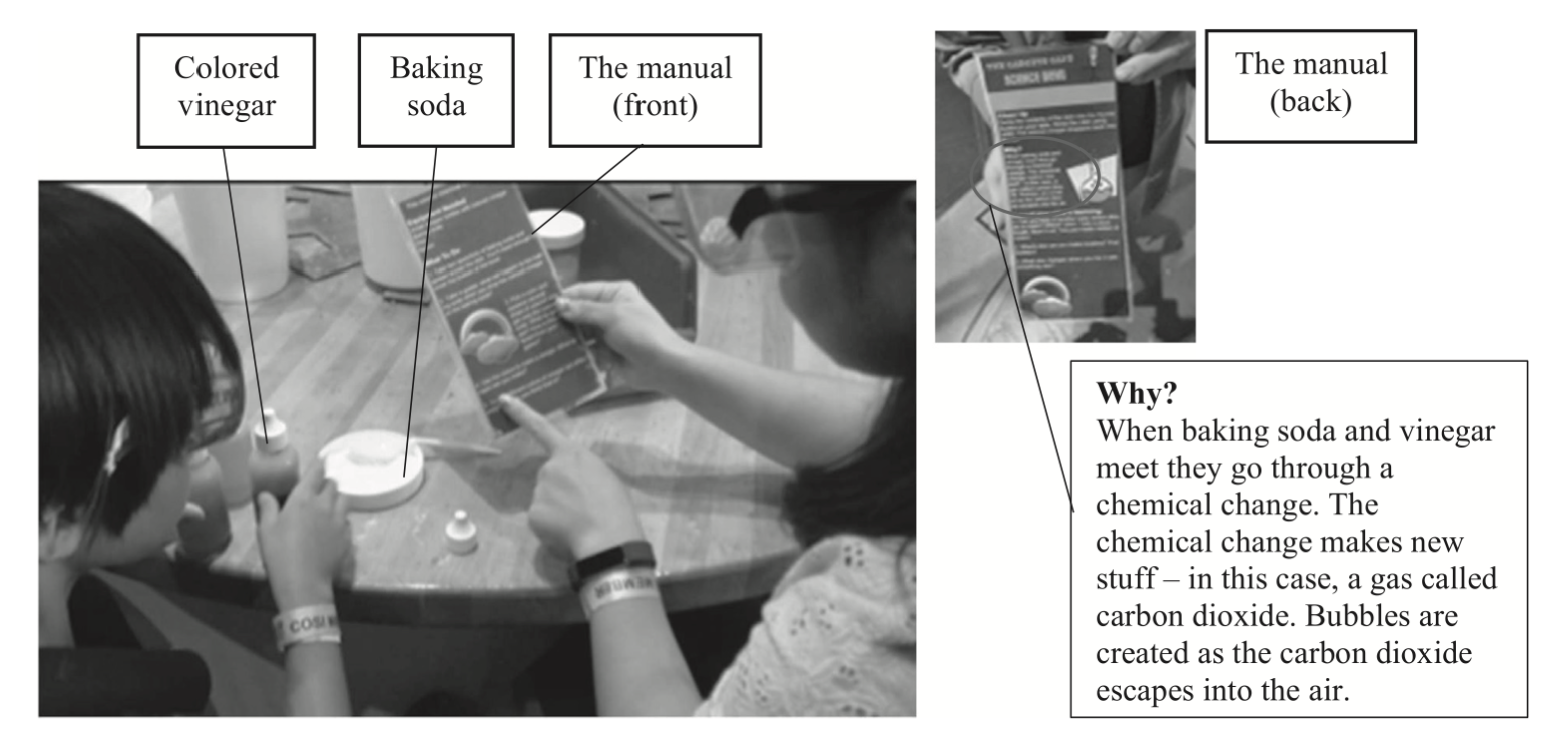
The moment that launched a long-term research program on multilingual family learning.
That interaction led me to a question that still guides my work today:
How do multilingual families make meaning together in institutions that often assume a single language, a single pathway to participation, and a single definition of literacy?
Science museums provided an ideal place to explore this question. Families move freely through exhibits. They read signs, manipulate objects, ask questions, tell stories, and connect scientific ideas to their own lives. Learning unfolds through interaction rather than instruction alone.
Across years of observation and video analysis, I found that multilingual families draw on far more than spoken language. Meaning-making often emerges through gesture, gaze, movement, pointing, translation, and shared attention to texts and objects.
Children frequently take leadership roles. Parents become translators, co-investigators, and conversational partners. Scientific understanding is built collectively rather than individually.
These interactions challenged deficit-oriented views of multilingualism. Rather than seeing multiple languages as obstacles to participation, I came to understand multilingual repertoires as intellectual resources for learning.
Museums are often described as open and accessible learning environments. Yet participation remains shaped by language, institutional expectations, and assumptions about who counts as a legitimate learner.
My research asks how institutions can become better at recognizing the strengths multilingual families already bring. The issue is not simply whether families can access institutions. The issue is whether institutions can learn to see the competence already present within families.
That question eventually became the thread connecting all of my work: museums, architecture studios, teacher education, and public libraries.
This project became the foundation for my broader research agenda on multilingual family learning, professional vision, and social justice. The questions first explored in museums now extend into public libraries, teacher education, and other community learning environments.
Today, I continue to ask how institutions learn to recognize forms of participation that often remain invisible.